skip to main |
skip to sidebar
Much like our own Central Delaware Waterfront, Portland's (the anti-Philly in every way) South Waterfront neighborhood was little more than surface parking and vacant lots before this century's building boom. Just as in Philadelphia, developers dreamed of remaking this barren waterfront into a new and dynamic neighborhood, a new city complimenting the traditional city core, complete with its own skyline.
 Portland's South Waterfront neighborhood under construction, as seen from Marquam Hill.
NIMBYs.
Developers will always look at profitability first. They do that here and they do that in Oregon. When the waterfront was first eyed as the locale for Trump Tower, Bridgeman's View, and Sugarhouse Casino, the first thing any of the developers thought was "what's the best return on my investment?" And thus we saw renderings for gated developments with limited, if any, public waterfront access.
 A pedestrian and bike bridge will carry pedestrians over the busy I-5 corridor to SW Portland's South Waterfront neighborhood. Increased and properly managed tax revenue from successful private ventures like South Waterfront affords idealists a realistic vision.
The difference between Portlanders and Philadelphians is that the residents of South Waterfront's neighboring properties engaged in a productive dialogue with developers. But Fishtown and Northern Liberties residents (arguably neighbors to begin with) called for Trump to head back to New York and for Sugarhouse to take a hike, then had the nerve to ask for the city to pay for a free waterfront park on land that has sat idle for over half a century.
 Increased tax revenue generated by publicly supported private projects like South Waterfront can pay for public transportation expansions like trolleys and light rails.
 The successfully managed public transportation system, TriMet, is currently developing the nation's first, major car-free bridge, Caruthers Bridge, spanning the Willamette River to accommodate light rail, bike, and foot.
 A vision of a successfully redeveloped Central Delaware neighborhood, including high rise apartments and adjoining public space along the river.
Instead, those so determined to "save" their neighborhood from what they were certain were corporate pariahs bent on destroying a waterfront that didn't even exist, chased away the only people with the cash to save the waterfront that no one realized they wanted until the developers showed them it was there.
 A familiar sight along Philadelphia's Central Delaware seen at Callowhill, and without private development along the river, likely to remain the scene here for decades.
Next time one of these NIMBY hipsters starts praising Portland - the poster child for successful urban planning - remind them what they did to our potential Central Delaware, where we currently have no park, no trolleys, and no life. In what's commonly pegged "A City of Neighborhoods", Philadelphia's NIMBYs are anything but neighborly.
 In a unique success story, Portland's South Waterfront continues to grow in spite of our nation's current economy.
Why is everybody still talking about Portland, the city that stole PhillySkyline.com legend Bradley Maule? That city is like coffee in the 90's. And why shouldn't it be? They do things differently there.
I like to think I beat the hype with my brief stint in the City of Roses just after college graduation. Portland was lovely in 1999. Hipsters were still Emo, you could smoke in their gritty beer holes, and the Me Generation couldn't walk yet. When you told someone you were moving to Oregon, people would ask, "Why on earth would you move there?" It wasn't overpopulated with Brooklyn refugees scarfing down Soy Joy. It wasn't full of Prius driving idiots decked out in $300 peasant jeans from Urban Outfitters. Pioneer Square was full of homeless kids from wealthy suburbs and "Vaseline Alley" lived up to its name. Like Philadelphia, it was real, albeit in a very different way.
It still retains a unique funk regardless of the transplants. Like all cities, demographics will continue to shift. The real estate market certainly fed the nomadic droves looking for something new. I assume as the economy calms down, when people start looking at their houses as homes again instead of investments, the weirdos that invaded all of our American cities will return to that strange limbo known as suburbia.
Ongoing rant aside, Portland continues to do things right. With all these proposals, renderings, and discussions about our Delaware Waterfront which ultimately amount to one giant pipe dream, Portland, roughly one third the size of Philadelphia, managed to move a major interstate across the river and implement one of the most successful urban waterfronts in the country. It wasn't rocket science, it was action.
In Philadelphia we love to talk but do little else. When discussions begin to encompass droves of unqualified neighborhoods organizations that aren't schooled in urban planning or economics, you might as well stop the conversation right there because that plan isn't going anywhere.
 Portland found - after the herculean feat of moving Interstate 5 across a river - that the simplest solutions are the best solutions. The waterfront is little more than a patch of grass between Front Street and the Willamette River lined with a handful of unique fountains. Aside from the absence of the interstate, what makes it succeed isn't in what it is but in what it can do.
Almost weekly throughout the summer the park hosts concerts and events, Fleet Week, even brightly lit carnivals. Philadelphia, perhaps because of our inferiority complex, insists on doing everything big or not at all. An aerial tram across the Delaware River? Really? Instead of going grand, the Delaware River Waterfront Corporation should be spending its time looking for local carnivals, circuses, small concerts that don't require a huge stage and a staff of fifty.
Give people a reason to walk across the interstate and maybe you can stir up enough money for the lavish luxuries later. I'd make the short trek to Penns Landing if I caught a glimpse of a neon clad ferris wheel.
 Portland's South Waterfront neighborhood under construction, as seen from Marquam Hill.
 A pedestrian and bike bridge will carry pedestrians over the busy I-5 corridor to SW Portland's South Waterfront neighborhood. Increased and properly managed tax revenue from successful private ventures like South Waterfront affords idealists a realistic vision.
 Increased tax revenue generated by publicly supported private projects like South Waterfront can pay for public transportation expansions like trolleys and light rails.
  The successfully managed public transportation system, TriMet, is currently developing the nation's first, major car-free bridge, Caruthers Bridge, spanning the Willamette River to accommodate light rail, bike, and foot.
 A vision of a successfully redeveloped Central Delaware neighborhood, including high rise apartments and adjoining public space along the river.
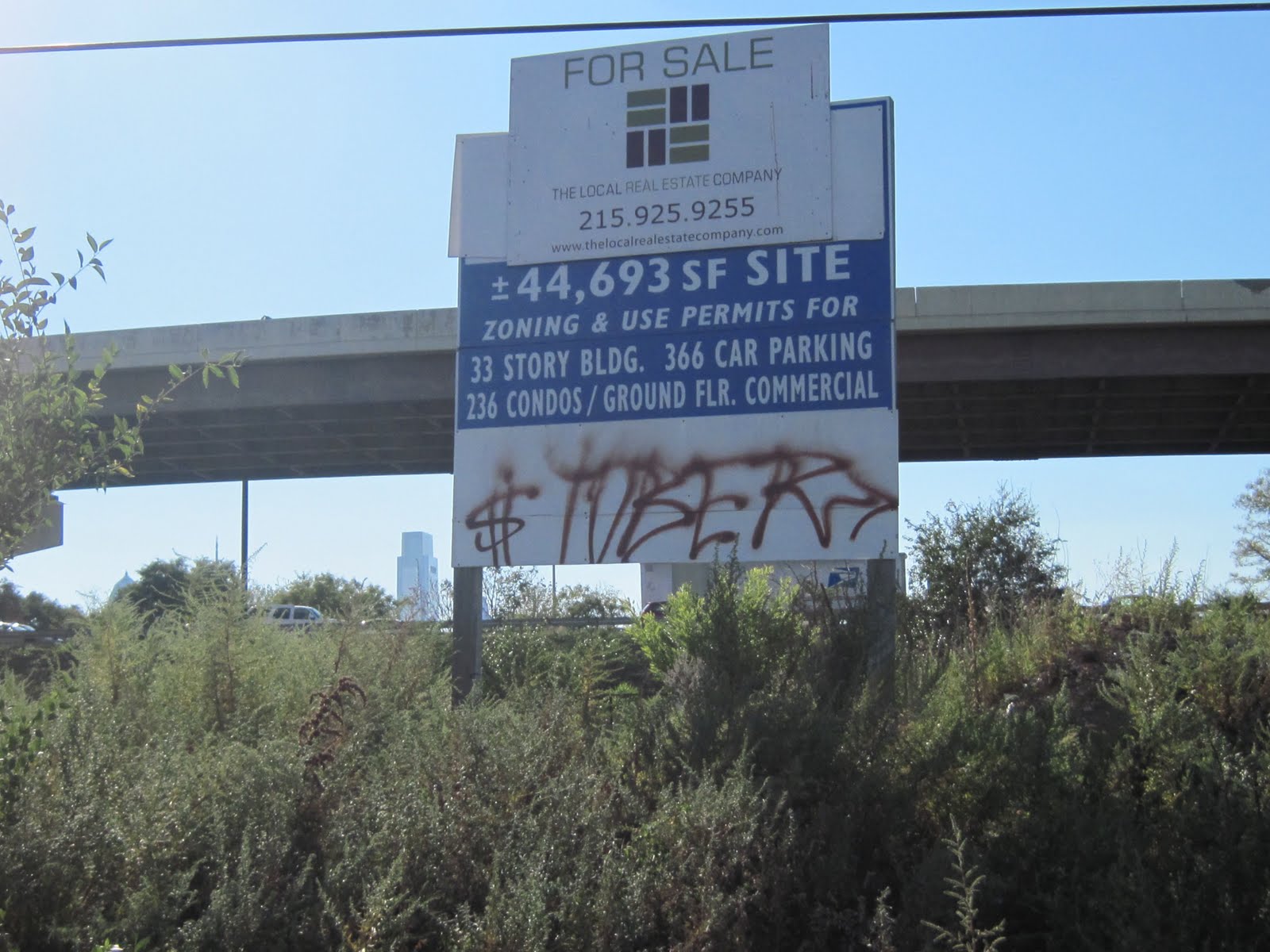 A familiar sight along Philadelphia's Central Delaware seen at Callowhill, and without private development along the river, likely to remain the scene here for decades.
 In a unique success story, Portland's South Waterfront continues to grow in spite of our nation's current economy.
