Friday, December 30, 2011

Breaking Christmas

It's a common gripe around the holidays, "Christmas just flew by," or "it seems to start earlier every year." It's true, especially as you get older. When you're not riddled with insomnia the night before in anticipation of the Red Ryder you know is under the tree, the Christmas season isn't just time for tree trimming parties and eggnog, but also a burdensome source of anxiety, travel, and shopping malls packed with frenzied last minute shoppers.

But ever since Macy's first Thanksgiving Day Parade, the Christmas season has begun the day after, Black Friday. And although as a child that month seemed an eternity, as an adult those 30 days are a perfectly respectable amount of time to shop, throw parties, and put up some decorations. As one of our nation's largest holidays for both the religious and secular, however you decide to celebrate, one month is plenty of time. I

n recent years a number of retailers have attempted to push the envelope, starting sales and installing Santa displays in the weeks before Thanksgiving, but not until this year has there been such a unified attempt to start the official season a month early.

The city's lights seemed to go up the day after Halloween. No one even complained about religious verbiage on government buildings and public schools, not because people have become more sympathetic or patient, but because we were so blindsided by Christmas this year that the complaint department didn't know where and when to register.

One month in, people were stuffing themselves with turkey and ham wondering where the Christmas tree was, forgetting that it was still a month away. The season has become the cultural equivalent of carrying a baby to term or planning a wedding, ending in a deep depression the day after New Years that comes back to bite you in the ass on February 14th. Only we have to do it every year.

In the longest Christmas season the nation has ever seen, it went by faster than ever. Articles chastising merchants for opening stores at midnight outnumbered uplifting stories about Yule Time revelry and anonymous acts of kindness.

By December 25th, colorful lights and beautiful window displays were nothing more than white noise which retailers couldn't wait to replace with the day-after sales. We had the baby, the wedding is over, and we're left with nothing but the nagging notion that we only have ten more months until we have to do it all over again.

We broke Christmas, a holiday fast losing any real significance outside the farms of Lancaster County. If the seasonal sprawl repeats itself in the future, retailers may find thousands of consumers too exhausted to bother.

Friday, December 9, 2011

Paradise City

If you're familiar with Philadelphia, you know what an abandoned building can do to the morale of its neighbors. If you're familiar with West Philadelphia, you're familiar with the Croydon. If not, you may have mistaken it for an old West Philadelphia high school. This mistake is easy, as the blighted edifice looms over West Philadelphia High School's athletic field.

Once home to the children of the Industrial Revolution, the Croydon has established a reputation with an underground community that sponges off the working class, property owners, and everyone in between.

Squatters.

I'll get to them in a moment.

The Croydon's sketchy past is fit for a horror movie and has undoubtedly encouraged more than a few kids to play Candy Man, a horrific tale that came true in 2007 when its rooftop was the site of a grizzly murder.

Purchased by Orens Brothers in July, the apartment building at 49th and Locust stands to redefine the fringe of University City with $10M in renovations. One to three bedroom apartments will be offered in the rehabbed apartment building for $600 to $1300 a month.

As it stands, the neighborhood has done nothing but applaud the project, including full support from Councilwoman Jannie Blackwell.


Orens Brothers rendering of the rehabilitated Croydon Apartments

If unanimous support wasn't weird enough, don't forget where we are.
The property has a national reputation amongst a loosely knit community few know much about. Philadelphia's decidedly homeless, international transients, and a pantheon of undesirables have dubbed the Croydon "Paradise City." The origins of its namesake aren't certain, but one can assume it refers to the fact that its absentee owners allowed it to stand open and unsecured, allowing vagrants to occupy its floors unchecked, siphoning off its available resources.

This community of modern day hobos is surprisingly active. An Internet search for the Croydon Apartments finds many benign blogs and articles about the building's colorful history, followed by hostile comments from its illegal inhabitants defending their right to live off the grid, illegally trespassing and vandalizing private property.

Thi Chien went as far as documenting three days in the lives of two of its residents, Papi and Christina, glamorizing their life of panhandling, drug abuse, and crime.

It's hard to muster sympathy for these people. Choosing a life of homelessness and abusing the strapped resources set aside for those with no alternative is insulting to the thousands of situationally homeless residing in Philadelphia who struggle to contribute to society. To be born to family, privilege, or opportunity and cast it aside for a culture of ingrates who find solace in one another's laziness is the ultimate exercise in narcissism.

There is an incredible arrogance that comes with playing Box Car Willy while claiming to make a statement, particularly in those who expect the "close minded" property owners to supplement this lifestyle. 

The Croydon Apartments circa 1925, shortly after its opening
Ironically, these aren't the products of a bad economy, but of a bloated financial situation: so bored, guilt-ridden, and entitled that the only path to self actualization is completely checking out of the society that created them.

The hypocrisy is evident in, among other things, the fact that they are blogging from the top of the Croydon from smart phones. Then again, what else is there to do after shooting up, eating a can of dog food, and dodging concerned relatives?

The parasitic counter culture manages to hide in society's cracks between hipsters and big-city tunnel-vision, but if you've been to Philadelphia, you've seen them.

These times are trying for most, and as more and more continue to struggle with the realities of an economic crisis, playing homeless won't be the ironic game it was when we were at the climax of our 21st Century Gilded Age.

The Croydon's resurrection as a place for those seeking affordable homes and neighbors yearning for pride in their neighborhoods is a welcome glimmer of hope. It's time for Papi and Christina to move over for those who contribute to a greater Philadelphia.

Thursday, December 8, 2011

Phil E. Moose

The Sixers have decided to retire Hip Hop the rabbit and they're leaving his replacement up to us...kind of.

The most creative minds at the Seventy Sixers have offered us Big Ben, B. Franklin Dogg (yes, with two g's), and Phil E. Moose as optional replacements.

Ben Franklin's connection to '76 is obvious - and overdone - although he never responded to the name of London's famed clocktower, nor had any relation. B. Franklin Dogg's connection is in the dog's namesake only. But Phil E. Moose, a moose? I don't get it. I feel like the marketing team at the Seventy Sixers might already made up their minds and decided to hand our basketball team over to Ben Franklin by offering us two terrible alternatives.

I mean really, a moose. I actually had to look it up: The moose's closest modern natural habitat is upstate New York. Way upstate.

Come on guys.

You decide.

Friday, December 2, 2011

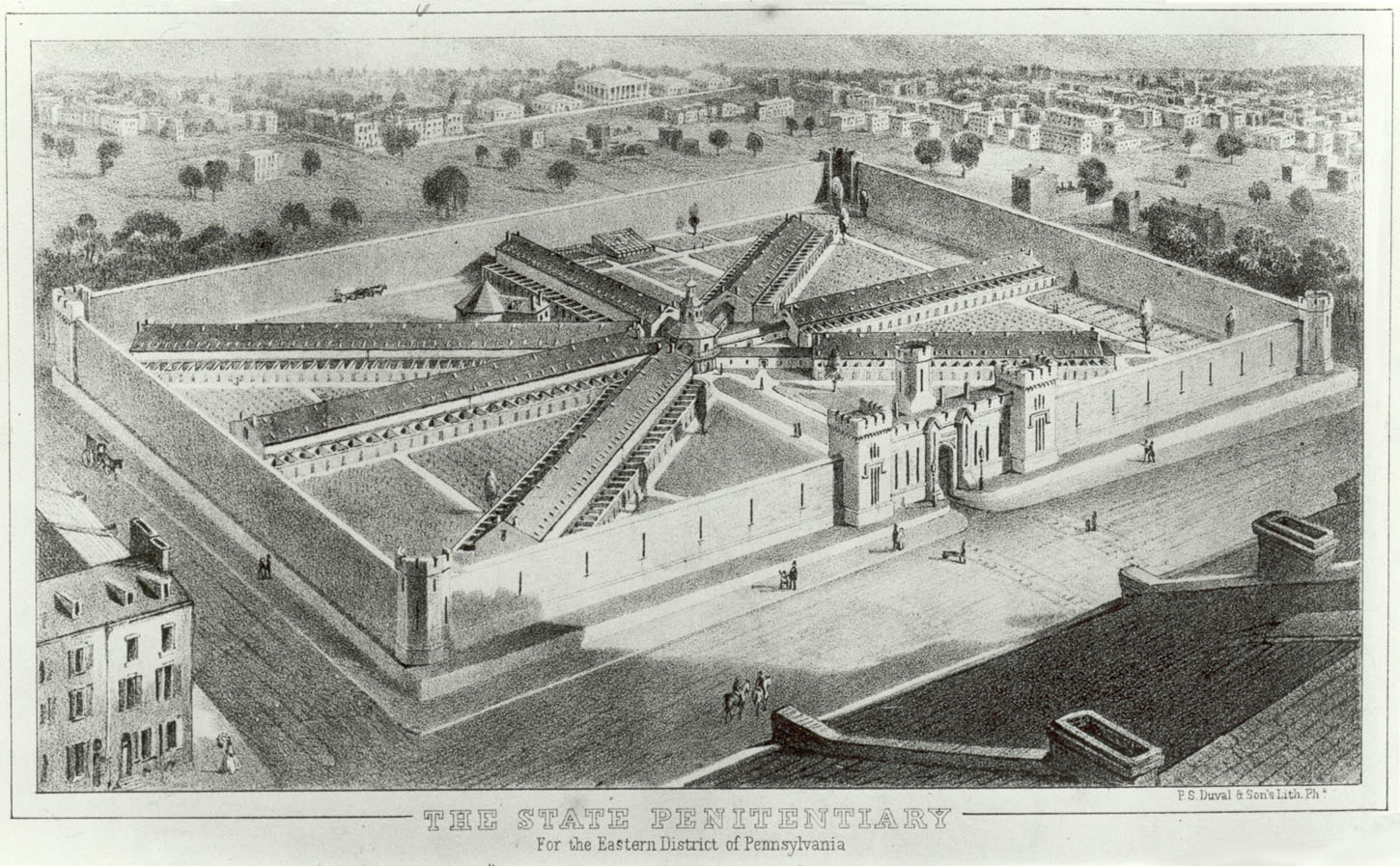
"Do We Really Still Need Eastern State Penitentiary?"

The title is in quotes because I'm not asking, rather that's the question posed by Philadelphia Magazine writer, Annie Monjar in an article of the same title. I have a question of my own. Has Philadelphia Magazine officially lost it, or are they desperately baiting angry comments in a grab for ad sales?

I'm all for experimental solutions to unusual problems, but Eastern State poses neither a problem nor a need for resolve. In fact, Eastern State's popularity among tourists and curious locals has done its part transforming a once iffy neighborhood. It's amusing that Monjar cites the neighborhood's gentrification success without giving Eastern State it's credit. Instead she carries on about friends she "dragged" to the site who ask, "they need the whole thing?"

She suggests a questionable need for a fortressed park within spitting distance of the Parkway, Fairmount, and the Schuylkill River Trail. The fact that she accuses Eastern State's size as a waste of space yet neglects to mention the adjacent surface lot, nearly the same size, says a little bit about where she might be from. Philadelphia newcomers have a nagging habit of embracing what makes Philadelphia unique before they move in, followed by a disdain for the unique when it compromises their creature comforts.

To be fair, Monjar hasn't proposed bulldozing the historic structure, not completely, but rather delegating a portion of its walled grounds as public park space by razing the less restorable wings. Monjar obviously didn't visit Eastern State in the mid-1990s when its doors were first opened to those with a hard hat and a sense of adventure. If she had, she would know that the foundation's initial mission was to maintain the site's decay as part of its history rather than rewriting it through renovations and restorations. It's a very unique concept and one that we've embraced at Eastern State for two decades.

Unlike Alcatraz, visitors to Eastern State are confronted with the same bleak experience that Charles Dickens wrote about after his visit. Its self guided tours offer visitors a history lesson, but its open ended experience allows the more adventurous the opportunity to wander, enjoy its peaceful surroundings, and enjoy the art exhibits that fill its forgotten cells.

While the article seems harmless on the surface, the fact that such an opinion has been printed in a local publication suggests an increasing lack of understanding and respect for our city's history. Philadelphia is old. Would London raze part of it's Tower for public park space? Although not nearly as old, like European cities, much of our history lies in our ruins.

Those of us that know Philadelphia know what we've lost. We know what a blessing it is that this site has survived countless proposals that called for its demolition. To come to Philadelphia and propose demolishing even a portion of Eastern State for a park is on par with clearing part of the Acropolis for condos. That may sound absurd to someone like Monjar who I can only assume is new to Philadelphia, but like Athenians and Romans, we have an unwavering pride in our landmarks that can be just as loyal.

I can be staunchly pragmatic when it comes to business and development, but one thing I love about Philadelphia is, like many European cities, when it comes to our history, sometimes, sacrificing even a piece of grass to maximize perceived potential, isn't worth the financial benefits. Perhaps that's where Monjar is lost. When we walk though the gates of Eastern State, we see the history in every square foot of its grounds. When Monjar and her apparently unimpressed friends enter, they see a pile of bricks. They're looking for the tour guide and the gift shop. They want the history lesson printed in a coloring book rather than embracing the macabre experience.

I don't know Annie Monjar so I can't speak for her tenure in our city. I would like to assume that her proposal is a knee jerk reaction to something she doesn't get. She is obviously a talented writer, so I hope in time she comes to appreciate Philadelphia not just as someone who resides here, but as a Philadelphian. Perhaps, like many of us not native to Philadelphia, each continued visit to our landmarks' hallowed halls will bring her closer to understanding each brick's importance.

In the mean time, publishing such a brazenly anti-Philadelphian article in Philadelphia Magazine is disrespectful to its namesake.

Tuesday, November 29, 2011

Barely Human is Back

Thank you, Former Philadelphia Public School Superintendent, Arlene Ackerman, for reminding us all how many shady public figures there are in our region with absolutely zero regard for those they're hired to serve.


GREED


Arlene Ackerman eclipses Wall Street's abuse of the word. Getting rid of this money grubbing cow was a train wreck. She left her post with a $629M debt, and now she's making sure she maximizes the School District's strapped situation by sucking every cent possible out of it.


Let's break down the basics:


  • We The People paid Ackerman $905,000 to go away.
  • She had accumulated $86,700 in unused vacation time. 
  • Arlene Ackerman is now sitting on a check from the state for $991,700.
  • That's not including her annual salary of $346,00.


Now, are you ready for this? 

SHE HAS FILED FOR UNEMPLOYMENT.


Arlene Ackerman: the official who extorted almost a million dollars from taxpayers despite leaving her post more than half a billion dollars in debt. 
Arlene Ackerman: the highest paid public official in the city of Philadelphia, despite hundreds of layoffs on her watch. 
Arlene Acekerman: uncaring, unemployed in every sick sense of the word, and completely, un-apologetically, and 100% un-human. 


Sunday, November 20, 2011

Hoarders of History

Before I moved to Philadelphia in late 2003, I didn't know a lot about the City of Brotherly Love. What I did know, intrigued me. As a young child and in high school, I remember family trips to Phoenixville, which often led to a day of sightseeing in the city.


Anyone in their 30s and 40s knows that family vacations weren't what they are now. Christmas in Paris wasn't in store for the upper-middle class who could find deals on Orbitz, it meant you were loaded. For most of us, traveling meant packing up the Family Truckster and checking out a nearby city, or looking for the Worlds Largest Ball of Twine.


I applaud my parents for instilling in me the love of the road trip. To this day, if the destination is within driving distance I stick to the open road, knowing very well that half the excitement is in the journey. And like the fact that a vacation doesn't have to solely rely on its destination, the destination itself doesn't have to solely rely on its attractions.

Trips to New York weren't reserved for a two hour line to the top of the Statue of Liberty, but aimless meanderings through the East Village. And although I'm sure I took more than a few tours of Independence Hall in my childhood, what I remember most about Philadelphia were the street performers, its charming (and sometimes less than charming) side streets, and its never ending supply of antique stores.


In a place as old as this, our shops are more than just boutiques, they're museums in themselves. Before deciding to move here, I remember visiting the outdoor flea markets and South Street's junk shops. A lot of urban newbies might scoff at shops packed with musty furnishings and boxes of unmarked photographs, but these places are time machines. Real history extends beyond Antique Row and the Liberty Bell, and you might have to dig to find it, but the treasures of the past are in the apothecary bottles and bizarre contraptions buried in the boxes and display cases that once lined the streets of Philadelphia.


The Renaissance of urban living, particularly from the upper-middle class, has been both good and bad. Since families fled our cities for the suburbs, they've consistently remained a place for urban pioneers and eccentrics. Perhaps its these eccentrics, and those with an eye for the masked grit that opened the market for our hoarders of history. But with slowed suburbanization and reversed flight, the families that helped clean our streets and make our homes safer, have also led to increased rent and an abundance of suburban creature comforts that have eliminated that market for the strange.


South Street's junk shops are gone. Antique Row found new life with high priced history for those who can afford a "Philadelphia style" with little regard for where their merchandise actually originated. We've fared better than other places. New York and Chicago have been stripped of their hidden historys' soul. Perhaps its our marginally successful Renaissance that has enabled us to retain a bit of grit.


Summer still hosts monthly flea markets, and if you only go occasionally you won't notice that it's always the same stuff. Old City, while it is arguably our most gentrified section of Center City, is still home to a few warehouses filled with architectural relics, both affordable and not. South Street still has one amazing shop fit for a Stephen King novel. Filled with lamps, clocks, and chandeliers, when you walk through the store, no matter which way you look, you always feel alone. A converted Synagogue just below South Street has found a market amongst the hipsters looking for vintage duds and furnishings.


The best surviving store of Philadelphia's lost era of junk might be Anastacia's Antiques on Bainbridge Street. Filled with antique marionettes, animal skulls and hides, and antique religious iconography, the place rivals the Mutter Museum in the macabre. Anastacia's Antiques will not just transport you to the historic eras of its merchandise, but also to a time when these places packed our cities. While it's hard to imagine how these types of shops stay in business, the digital age has allowed a handful to stick around through online auctions and internet sales.

Friday, November 11, 2011

Bring Back the Boot & Saddle

As opposition mounts against the Boot & Saddle on South Broad, support for the venue's reinvention may put a stop to the NIMBYism that threatens to maintain the blighted destination's vacancy.

Sign the petition here.

One has to wonder, is only objecting this project considering the fact that this is a step up from the strip club down the street? Several steps in fact. I hear those girls don't bring their A-game.

Have they considered the fact that this could drive the redevelopment of the Broad Street Diner? Maybe they oppose that too.

And what does the Boot & Saddle's proximity to a church have to do with anything? People go to church in the morning, bars at night. Besides, this was a bar fifteen years ago, in the same proximity of the same church. As if it should matter. This is, afterall, a city.